Home / Thinking Zone / It's good to talk
Trust in technology series: It's good to talk
In the fourth of six pieces on Trust in Technology, eCom’s Creative Thinker, Sophie McKay Knight explores what role communication plays in the technology of our everyday interactions, how these interactions are shaped, and how the results can have a profound impact on trust.
Posted 28 July 2025

We reach for our phones several times a day to do things ‘instantly’ – scroll, pay a bill online, contact a friend, even apply for a job – and we trust that it will work, without properly understanding how. The ease of use and instant gratification provided by smartphones in recent years is a well-documented ‘problem’ for society – but, depending on your age - you might feel differently about using technology for something which requires trust. Keeping the human in tech is a relevant concern for us all, but is it becoming increasingly complex to do? Technology doesn’t just carry communication, it shapes and filters it, and this can deeply affect whether we trust it or not. Building and maintaining trust in digital communication requires thoughtful design, ethical standards, and transparency at every level.
So-called ‘Digital Natives’ - a term popularised by educator Marc Prensky in 2001 to describe younger generations who ‘speak’ the language of technology fluently - contrasts with older generations who are considered ‘digital immigrants’, and who might struggle with and/or mistrust technology. This is a generality of course – but it’s true to say that the ways in which different generations communicate is largely in line with what they have grown up with. However, it does seem that if you really need to say something important, face to face is always best - regardless of age.
With the move to so much digital communication in the post pandemic world, some may question the benefits of meeting in person - it can be time consuming and perhaps costly to get away from the screen - and it is undeniable that rapid advancements in technology have been instrumental in positive connections all over the world. However, non-verbal cues like body language and facial expressions are harder to read online, especially in video calls with lag or poor quality which can lead to misunderstanding or emotional distance.
Studies have found that people often feel less connected and less trusting in virtual meetings compared to face-to-face ones, especially when those relationships are new or fragile. It is reportedly ‘common’ to see people multitasking during online meetings – reading messages or perhaps working on something else, and it begs the question - would we do this face to face? Multiply all of this by thousands or even millions of people who are interacting online more often than not, and we have a societal shift.
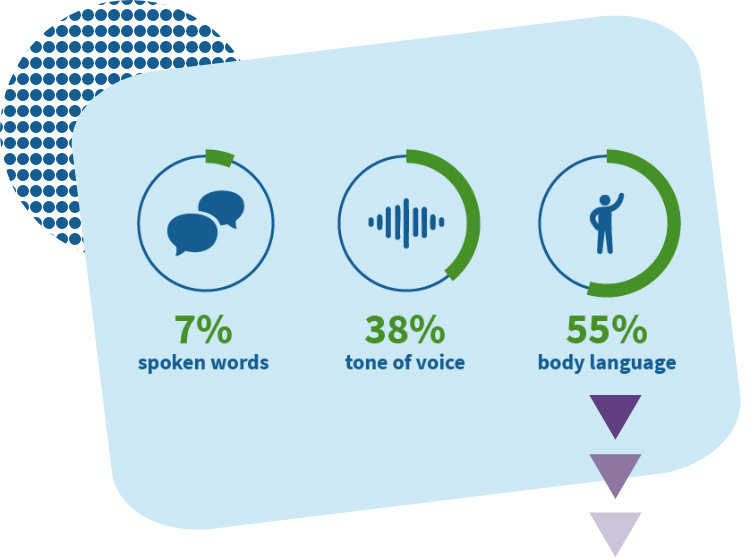
A widely cited theory in communication studies suggests that a significant portion of human interaction is non-verbal. This idea is often traced back to psychologist Albert Mehrabian, who in the 1960s conducted studies that led to the ‘7/38/55 rule’ – essentially meaning that when conveying feelings or attitudes, only 7% comes from words, 38% from tone of voice, and 55% from body language. Though often oversimplified, Mehrabian’s work highlights the powerful role of facial expressions, posture, gestures, and vocal tone in how we understand one another. It supports the idea that much of what we ‘say’ happens without speaking at all.
Have you ever experienced someone who is saying one thing verbally but quite another nonverbally? I know I have!
For the deaf community in particular, non-verbal communication is even more central and richly developed than in hearing communities. Since spoken language may not be accessible, deaf people rely more heavily on visual, spatial, and physical cues to communicate - making body language, facial expression and eye contact essential carriers of meaning. The recent UK television series ‘Code of Silence’ demonstrated very well how trust in communication is a shared responsibility – all sides in the story had to adapt and be aware of nuance for the trust to be established. By having a deaf protagonist (Alison, played by Rose Ayling-Ellis) at the centre of the drama, we were shown how the skill of lip reading is developed through piecing together fragments of information which are built gradually – just like trust is.

The facial expressions and body movements of BSL speakers are not just emotional cues - they are literally a part of grammar, and are a key factor in communication. Research has shown that deaf individuals often develop enhanced abilities in peripheral vision and visual attention (Bavelier, Dye, & Hauser, 2006), have faster visual reaction times (Neville & Lawson, 1987), and heightened tactile sensitivity due to cross-modal neuroplasticity (Levänen & Hamdorf, 2001).
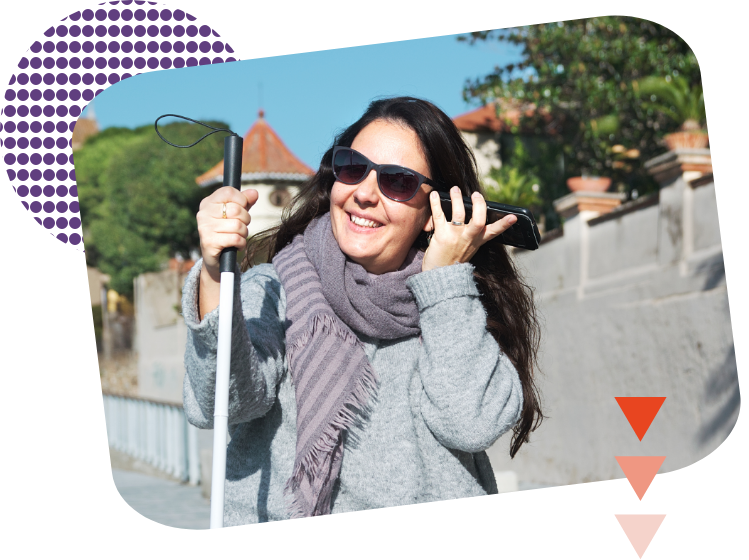
In a similar yet contrasting way, the blind community also communicate effectively using their own means. Without visual cues, things like tone of voice, choice of words, pace, volume and touch all become crucial elements in a conversation. Blind individuals often outperform sighted people in sound-based functions, often demonstrating exceptional echolocation skills (Thaler et al., 2014), enhanced auditory memory and speech perception in noisy environments (Röder, Rösler & Neville, 2001), as well as superior auditory frequency discrimination and verbal memory span (Gougoux et al., 2004; Occelli, Lacey, Stephens, Merabet & Sathian, 2017).
To get back to basics with communication, I went to the National Museum of Scotland last week to look again at their Science and Technology galleries, which are spread over 3 floors and showcase developments in transport, industry, medical science, computers and much more. The ‘Communicate’ gallery traces the evolution of telecommunications from semaphore systems to the first commercially produced Baird television and modernday smart phones. Having lived through many of the telephone developments in particular, it was fascinating to see how this technology has transformed.
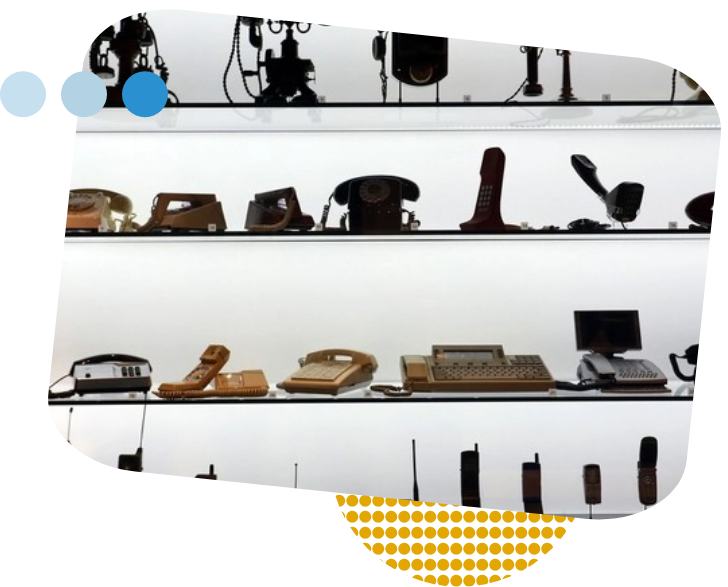
I was an adult when mobile phones became a common accessory, so am old enough to remember using the red (and then silver) telephone boxes and inserting 2p and 10p to call home. I remember all too well the smell of being inside a metal box which had not been cleaned, or even worse, where someone might have answered a call of nature. I can remember laughing at the so called ‘brick’ mobile phone which stock market traders used, and how ‘yuppies’ were mocked for carrying it around. It seemed ludicrous at the time that people would have one of these – but look at us now! We can hardly go ten minutes without checking our phones and the phenomenon of ‘phubbing’ (phone + snubbing) is a common sight.
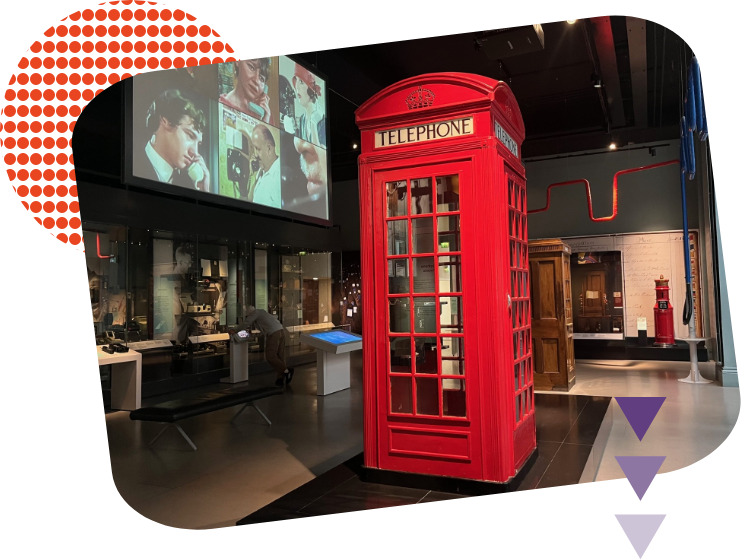
Seeing all the different phones made me think about the power of the voice, and how it can actually be more efficient than technology in problem solving - issues can be addressed in real time and nuance can be better understood on both sides. Hearing someone’s voice on the phone that you know well can be a way of sharing presence, carrying with it so many more emotional cues than just exchanging information via text. However, A Uswitch survey from 2024 found that about 25% of 18–34 year olds admitted they’d never answered their phone - and over half associated incoming calls with bad news; it also found that nearly 70% of 18-34 year olds prefer a text to a phone call.
Moving on from the museum, I visited Edinburgh Futures Institute for their weekly eCorner meeting, facilitated by John Hill. I was reminded of the value of being amongst people from different professional backgrounds, and how simply talking about what we do, can spark so many interesting ideas and connections.
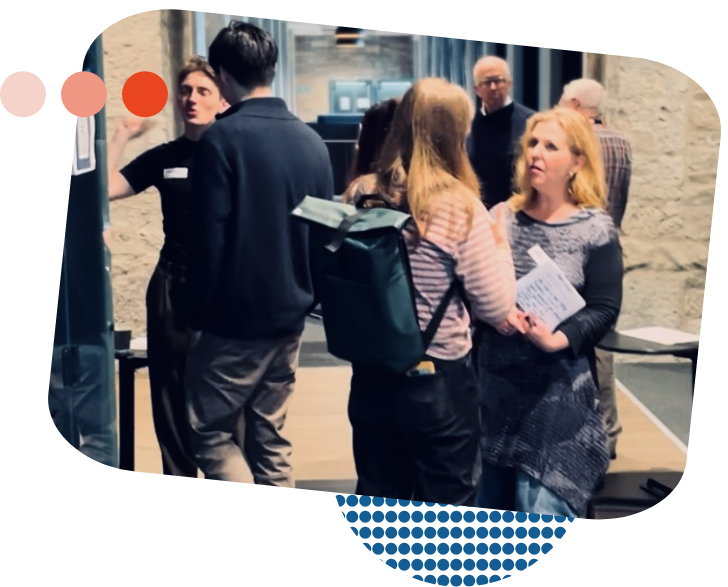
To get the group’s insights into the issue of trust in tech, I asked them to respond to the following statements: “I trust technology when...” and “I mistrust technology when...”
The resulting discussions were very interesting – here’s a few of the responses:
I trust technology when...
- I know it’s been tested thoroughly – I am a Quality Assurance and Software Testing Specialist!
- I know how it works.
- It has been developed through unbiased, rigorous and evidence-based approaches, i.e . research.
- I have assignments.
- It solves a specific task.
- I can see the full process (e.g. the washing machine cycle).
I mistrust technology when...
- It wants to gather unnecessary data.
- The benefits do not outweigh the data collection.
- I haven’t tested it.
- It steals data and copyrighted work (Gen AI).
- It is purely designed for profit and/or social engineering.
- I don’t understand why it needs my personal data, and how it’ll use it, and who owns it, and who could then buy it, and if that happens, whether I’ll be informed about what it’s being used for.
- Technology ‘eats’ electricity (humans eat food) and the National Grid is vulnerable.
Technology plays a crucial role in communication, but there are other important modes of connection – talking face to face, telling a story, creating music or art – even the ‘voice’ of a great character from a film or a book can communicate something important to us. And trust is also an essential component for good communication - so when we put the two things together we should have a powerful force. However, despite the fact technology is now deeply rooted in many cultures across the world, the trust in it (or in anything) should never be assumed.
The phrase ‘Trust is earned, not given’ is a common maxim, and probably has its origin in Aristotelian ethics - particularly his concept that virtue is developed through consistent, intentional action rather than mere intention or isolated deeds.
For Aristotle, ethos (character) is not innate but cultivated; people become trustworthy not by declaring themselves so, but by behaving in ways that repeatedly demonstrate integrity, reliability, and moral responsibility. Just as a person becomes courageous by doing courageous acts, they become worthy of trust by acting in trustworthy ways over time. In a modern context, especially with technology, this principle asks us to evaluate systems, companies, and individuals based on consistent ethical practice, not promises; and as we have seen in recent months (M&S and Coop cyberattacks), people are more aware than ever of the potential pitfalls of technology.
In my recent Trust in Healthcare piece, I explored the surge of trust in online ‘wellness’ practitioners, and found that the delivery method of information (largely via social media) is key because it is often very engaging and may ‘strike a chord’ – and it’s simply more immediate and accessible than conventional medicine. The fact that a wellness practitioner is appearing on a screen every day, sharing personal information and ‘earning’ the trust of viewers can be in stark contrast to waiting months for an appointment with a medical doctor who, through no fault of their own, has limited time and resources.
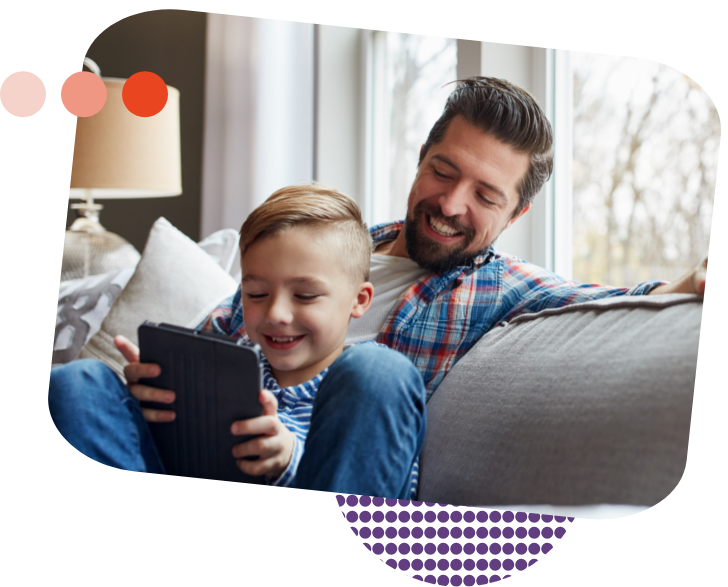
But the immediacy and seeming authority delivered by technology doesn’t mean we should always trust the message, and it seems there is a link between our sense of trust in childhood and how we relate to technology in later life. Trust in early childhood is shaped by the quality of our relationships with caregivers, especially if they give us consistent, responsive, and emotionally attuned caregiving, and if this sort of environment is not available to a child, it is no surprise that the resulting use of technology will be problematic; perhaps even a substitute for emotional connection or self-esteem.
Young people with secure early attachments often display more confidence in managing online relationships and boundaries, whereas those with insecure attachment styles may use technology to seek constant reassurance, such as over-sharing, checking messages obsessively, or mismanaging digital spaces. If trust isn’t built early on in the real world, some young people may also use technology impulsively or in risky ways (sexting, sharing personal info), not fully understanding boundaries and consequences.
Early experiences contribute to the internal models that guide how we view the world and our place in it, perhaps staying with us for life - and technology is just one of the many ways in which this world view can be communicated. So it is important to remember that technology is essentially a neutral tool which can be used, trusted or mistrusted by us humans – and whatever ‘tech behaviour’ is being manifested in young people, it is merely a reflection of their cognitive development jostling alongside their digital environs.
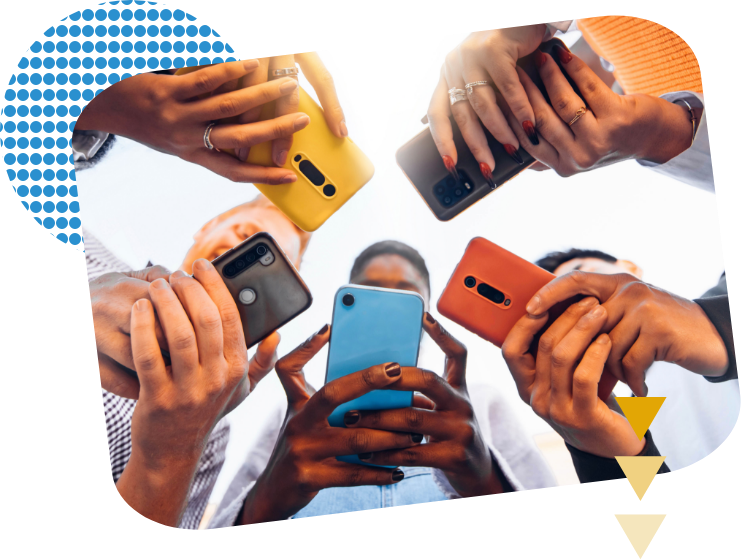
When we place our trust in technology as a medium for communication, we are, in a sense, extending our willingness to connect through unseen wires and silent algorithms. This trust allows us so many things because through it we can communicate our humanity and preserve our personal stories. But it also demands that the tools we use remain transparent, ethical, and human-centred - and that things don’t get lost in translation. In theory, technology now exists to banish any real delay between sending out a communication and receiving a reply. Gone are the days when you had no choice but to keep an eye out for the postman who might be bringing important news in a letter; hopes lifted or dashed for the whole day, depending on what was written…
“I lived for the letter, waited for the post, as though my whole happiness hung upon a single piece of paper.” Turn of the Screw, Henry James
What’s your favourite mode of communication and do you trust it? Do you have an opinion on technology and communication?
Get in touch
At eCom we love to hear from people so if you have enjoyed this content from the Thinking Zone or would like to pose a question to our Creative Thinker in Residence then please do get in touch or follow us on LinkedIn.